
Childhood Cataracts
Understanding and
Treating the Condition
At Little Eyes, we prioritise the early detection, treatment and follow-up of childhood cataracts to ensure healthy vision development.
About Childhood Cataracts
Cataracts occur when the lens of the eye becomes cloudy, preventing light from passing through and causing blurred vision. Although commonly associated with adults, cataracts can also affect babies and young children. Prompt treatment is crucial, as delays can lead to complications like lazy eye (amblyopia). Additionally, a thorough assessment of the child’s overall health to ascertain the cause of the cataract and possible genetic testing may be necessary.

Cataracts
Symptoms
Cataracts
Lorem ipsum dolor sit amet, consectetur adipiscing elit. Ut elit tellus, luctus nec ullamcorper mattis, pulvinar dapibus leo.
Symptoms
Lorem ipsum dolor sit amet, consectetur adipiscing elit. Ut elit tellus, luctus nec ullamcorper mattis, pulvinar dapibus leo.
Treatment
Options
Surgery is the only effective treatment for cataracts. Early intervention is critical for optimal outcomes. A paediatric ophthalmologist will remove the cloudy lens during a quick and safe procedure under general anaesthesia and place an intra-ocular lens.
Childhood Cataracts
FAQS
Should newborns with cataracts undergo surgery immediately?
Yes, surgery should be performed within 2-3 months after birth, sometimes as early as six weeks.
Is surgery safe for a 2-month-old baby?
Yes, modern surgical techniques and anaesthesia are safe for newborns.
Will my child need glasses after surgery?
Yes, glasses are essential to support proper visual development. Choose comfortable frames your child will enjoy wearing.
Will the glasses be thick?
If an IOL is implanted, the glasses will be thin and primarily for near vision. Without an IOL, thicker glasses may be required.
Why might an IOL not be used?
- The eye may be too small or underdeveloped.
- Eye inflammation is present.
When is my child old enough for an IOL?
IOLs are suitable for children over 2-5, as their eye growth stabilises.
Will additional treatments be needed after surgery?
Yes. Glasses are mandatory and patch therapy may be required if a lazy eye has developed. In some cases, laser treatment or repeat surgery may address posterior capsule opacification (PCO).
Can normal vision be restored?
This depends on factors such as:
- Age at surgery.
- Severity and duration of the cataract.
- Post-surgery use of glasses and patch therapy.
- The overall health of the eyes and brain.
Will vision improve immediately after surgery?
Vision improvement may vary. While some children see immediate results, others experience gradual improvement over time.
Can diet or vitamins cure cataracts?
No, cataracts cannot be treated with dietary changes or supplements.
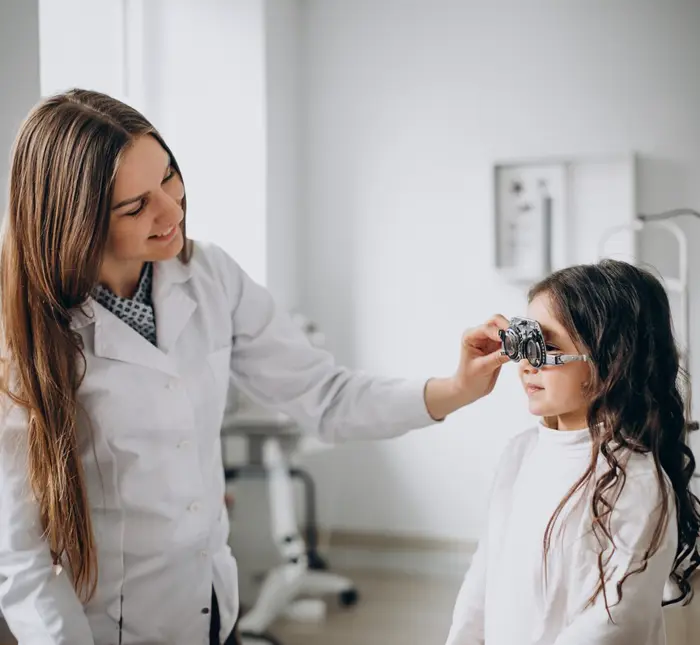
Why Early Treatment Matters
Childhood cataracts, if left untreated, can cause irreversible vision loss. Surgery is the first step, but follow-up care, glasses and possible additional treatments are crucial for restoring vision and ensuring normal eye development.
At Little Eyes, we are here to guide you and your child through every step of the journey to a clear, healthy vision. Schedule a consultation today!
Childhood Cataract
Why Choose Maxivision Eye Hospitals
for Childhood Cataract Treatment?
At Maxivision Eye Hospitals, we understand the importance of early diagnosis and expert care for childhood cataracts. Our specialized pediatric ophthalmologists offer advanced congenital cataract treatment, ensuring the best possible vision development for your child.
Expertise in Pediatric Eye Care
- Highly Experienced Specialists: Our team is trained in handling delicate pediatric eye conditions.
- Comprehensive Diagnosis: We use cutting-edge technology to assess and treat childhood cataracts effectively.
Advanced Treatment & Personalized Care
- State-of-the-Art Surgery: Safe and precise cataract removal under general anesthesia.
- Customized Vision Rehabilitation: Post-surgical care includes glasses, contact lenses, or vision therapy to ensure optimal results.
- Long-Term Follow-Up: Regular monitoring to track visual development and prevent complications.
Why Early Intervention Matters
Delaying childhood cataract treatment can lead to lifelong vision impairment. At Maxivision, we provide comprehensive care from diagnosis to recovery, ensuring your child’s best chance at clear vision.
Book an appointment today to give your child expert eye care!


